 LinkedIn
SPE-230623-MS
Presented at HFTC 2026, the full whitepaper is available here: “Frac Optimization: Analyzing Operational Metrics That Matter.”
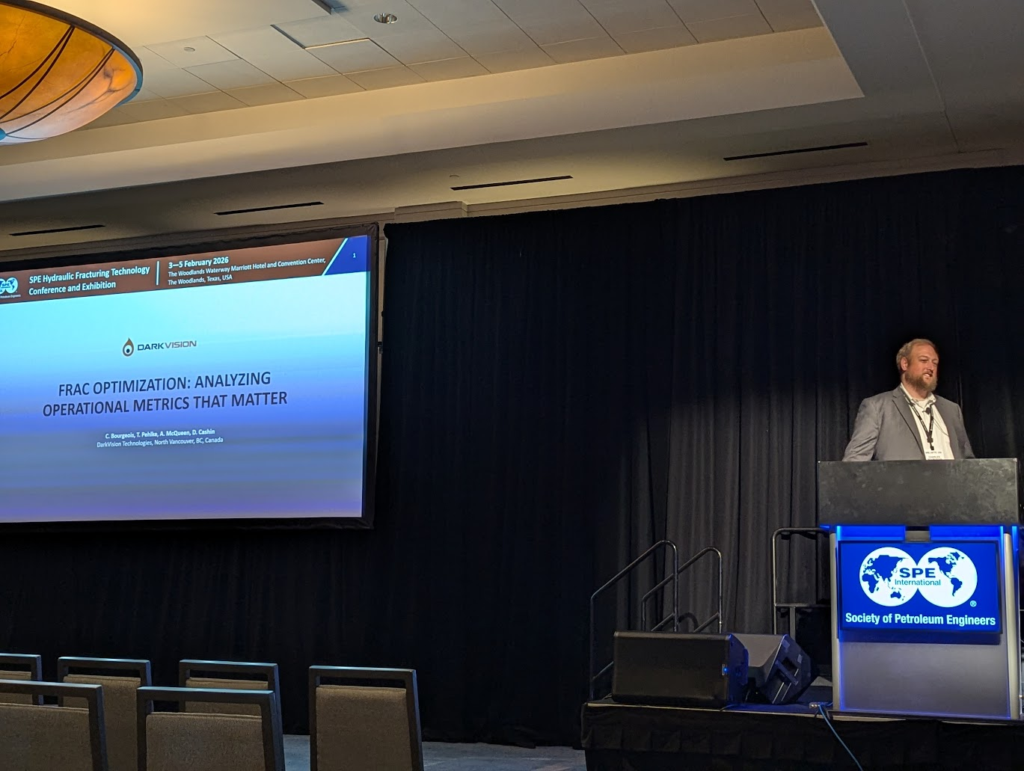
Hydraulically fracturing wells as designed is critical to maximizing the asset’s economic value. High-resolution acoustic imaging has played a critical role for operators in the continuous improvement of hydraulic fracturing as the diagnostic technology of choice for improving their completions design and stimulation strategy. This technology has been deployed in basins across the globe to analyze over half-a-million perforations and improve the completions design and execution of top-performing operators.
This paper analyzes select metrics from the aggregate database to assess industry’s fracture operation performance using six key completion operations KPI’s. Armed with these industry wide insights, operators can get a better sense of their performance relative to peers. Reducing this variability through routinely quality controlling (“QC”) these KPI’s will reduce well-to-well variability and increase stimulation performance as it relates to UI, heel-toe bias, and operational expense (OPEX) budgets.
The KPI’s assessed are:
- Cluster depth control
- Plug depth control
- Perforations shot on connections
- Phase orientation accuracy
- Plug performance
- Shot size variability
Completing wells with a minimal amount of deviation and variability from design on these KPI’s has a clear impact on the performance of the well: both in hydrocarbon recovery and reduced OPEX. This study shows that there is a high degree of KPI variability between individual wells, basins, and operators. Specifically:
- Cluster and plug depth control: The industry average combined cluster and plug depth offset is 7.9-ft.
- Phase orientation accuracy: Orientated systems are a proven method for reducing perf size variability and improving shot phase accuracy and typically perform as intended. However, poor deployment or device failures reduce VUI by up to 20%. Therefore, ensuring that the orientation is executed as designed is vital to wells performing as anticipated.
- Plug performance: Plug performance across industry is variable based on plug type and design. Plug failures and breaches have a notable impact on stimulation performance, specifically on the uniformity of the stages up and down well of the failed stage.
- Shot size variability: Understanding the starting hole size of a perforation is a critical factor in designing completions. Differences in reference perforation shot size diameter of as little as 0.02-in can determine whether limited or unlimited entry conditions are achieved. Charge type and charge carrier variance in shot size is evident both within a single well and from well to well.
This paper presents several novel insights regarding key operational frac KPI’s. Obtained through an aggregate analysis of the world’s largest perforation database, these insights highlight the variability in operational performance from well to well across industry regarding the KPI’s identified.
Paper Number: SPE-230623-MS
Authors: Charles Bourgeois; Trent Pehlke; Adam McQueen and Darren Cashin.
Updates
See all
Zooming Out: Integrating Near Wellbore Analyses to Optimize Field Performance
Adding Depth: The Superiority of Volumetric Perforation Erosion Analysis

PPIM 2025 Paper: Introducing Triple-threat Detection and Sizing in a Single Pass

Assessing the Impact of Oriented Perforating Strategies and Frac Plug Performance in DJ Basin Wells
High-Resolution Acoustic Imaging Deployed for Mapping Permanent Fiber Optic Lines

On Track for Refrac: Targeting Under-Stimulated Stages and Assessing Casing Integrity Defects with High-Resolution Acoustic Imaging
“A Shift or Not a Shift?” Evaluating Sleeves in the latest paper by ConocoPhillips
ICoTA Woodlands 2023: Virtually Unplugging Perforations: Advanced Entry and Exit-hole Analysis
Newsletter Signup
By clicking Submit you’re confirming that you agree and consent to our Terms and Conditions.