 LinkedIn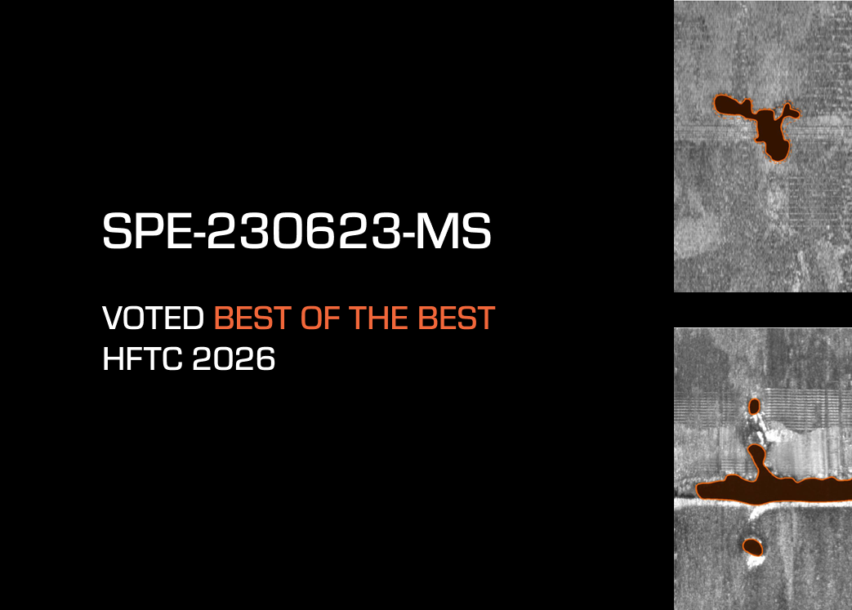
After a momentous launch for KRAKEN at PPIM 2025, DarkVision has returned in 2026 with a new paper focused on complex and interacting anomalies. Find the paper, “Beyond the Surface: Dig Results from Direct Imaging ILI of Seam Welds and Complex Crack Defects in Pipelines” here.
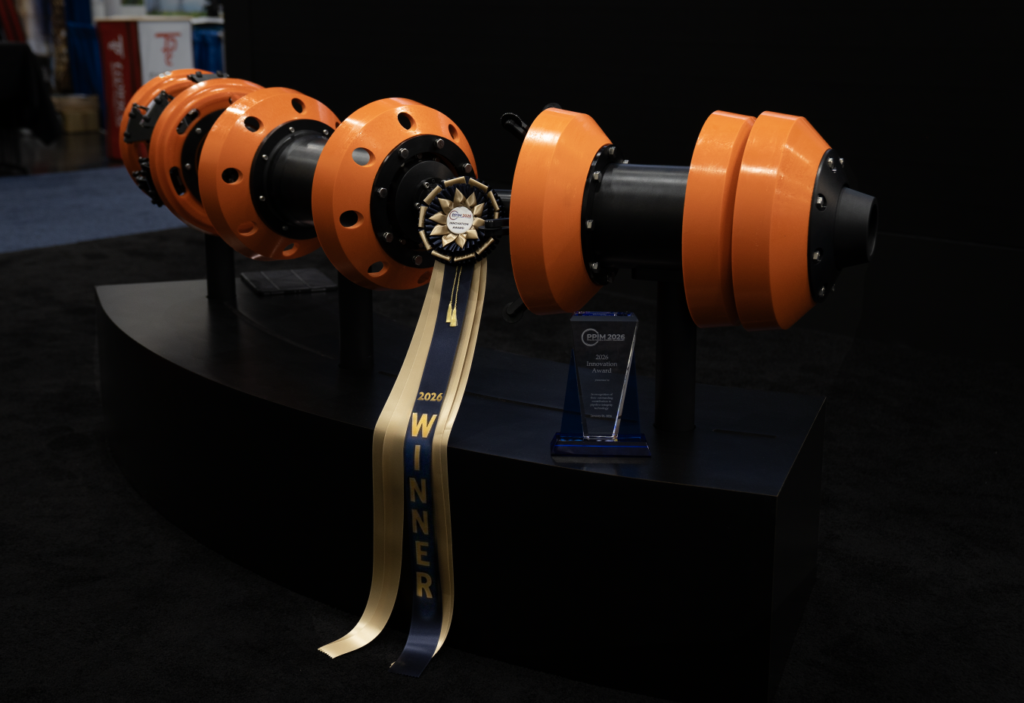
We’re also thrilled to announce that DarkVision was awarded the Innovation Award which recognizes noteworthy innovations in pipeline integrity.
Thanks to our authors, collaborators, and the voters at PPIM for an incredibly memorable year. The full abstract of our paper can be found below.
Beyond the Surface: Dig Results from Direct Imaging of Seam Welds and Complex Crack Defects
Pipeline operators are significantly de-risking the detection and assessment of anomalies in their pipelines with a new direct imaging ILI technology. This paper focuses on novel methods to directly image and measure the unique morphology of complex and interacting anomalies found in the field. Field validated results include the classification and measurement of misaligned and over/under trimmed weld profiles, short lack-of-fusion (LoF) penetrators, and hook cracks in welds. Additionally, stress corrosion cracking (SCC) and complex laminations with surface breaking features are showcased from field data.
Lab validation of manufactured flaws is also conducted to benchmark the imaging and sizing performance of complex defect classes. Findings are compared against industry standard inspection methods including metrology-grade laser scanning, handheld phased-array ultrasound, and TOFD-based inspection techniques.
First introduced at PPIM 2025, this high-resolution direct imaging ILI technology directly measures metal loss, axial cracks, and changes in pipe wall geometry, all in a single run. The result is a single, unified, high-fidelity 3D dataset that simultaneously resolves anomalies missed with traditional detection capabilities and enables every anomaly to be comprehensively evaluated for geometric, metal loss, and crack-like components. Operators are leveraging the tool’s technology to inspect their lines down to 0.01in resolution at 6.7mph inspection speeds to confidently identify and analyze the exact morphology and severity of threats. The resulting methods outlined in this paper significantly reduce false positives, lower the uncertainty of anomaly measurements, and improve the detection and identification of anomalies that pose a high risk to critical infrastructure.
Authors
G. Simpson1, C. Richards1, M. Lu1, A. Schwing2, J. Moritz2
1DarkVision, North Vancouver, Canada, 2Flint Hills Resources, Wichita, USA
Updates
See all
Zooming Out: Integrating Near Wellbore Analyses to Optimize Field Performance
Adding Depth: The Superiority of Volumetric Perforation Erosion Analysis

PPIM 2025 Paper: Introducing Triple-threat Detection and Sizing in a Single Pass

Assessing the Impact of Oriented Perforating Strategies and Frac Plug Performance in DJ Basin Wells
High-Resolution Acoustic Imaging Deployed for Mapping Permanent Fiber Optic Lines

On Track for Refrac: Targeting Under-Stimulated Stages and Assessing Casing Integrity Defects with High-Resolution Acoustic Imaging
“A Shift or Not a Shift?” Evaluating Sleeves in the latest paper by ConocoPhillips
ICoTA Woodlands 2023: Virtually Unplugging Perforations: Advanced Entry and Exit-hole Analysis
Newsletter Signup
By clicking Submit you’re confirming that you agree and consent to our Terms and Conditions.